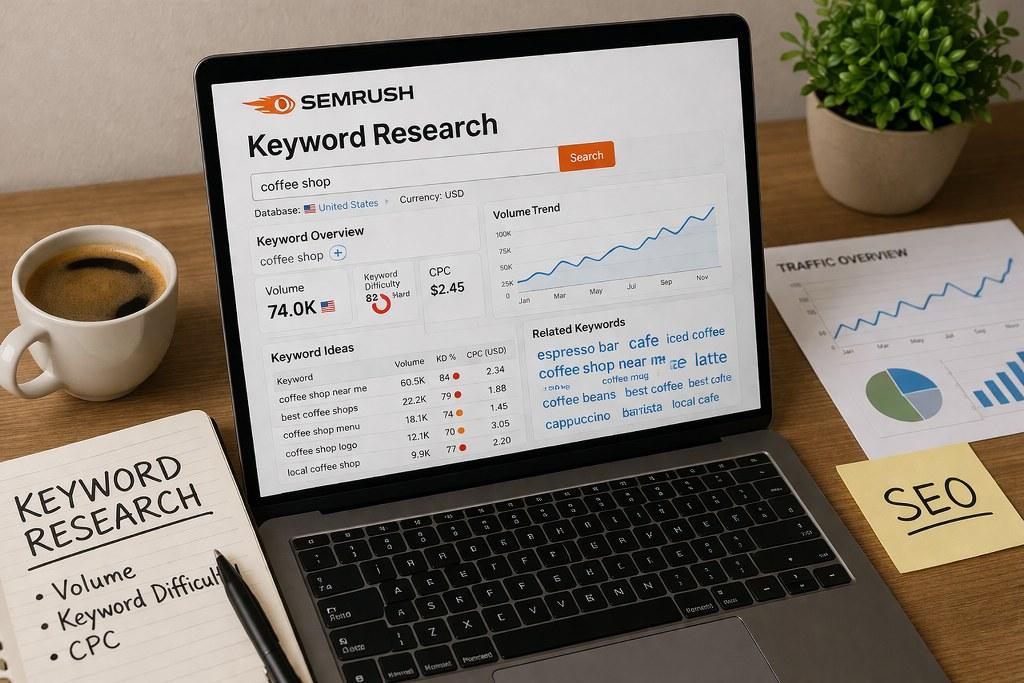
For many small businesses, having a website is only the beginning of building an online presence. The next challenge is helping potential customers discover that website when they search online.
This is where Search Engine Optimization (SEO) comes in.
SEO is the process of improving a website and its content so that search engines can better understand the website and connect its pages with relevant searches. For a small business, a good SEO strategy can help increase online visibility and make it easier for potential customers to discover its products or services.
The good news is that businesses do not necessarily need a huge marketing budget to begin working on SEO. Understanding the fundamentals and consistently applying good practices can provide a strong foundation.
What Is SEO?
SEO stands for Search Engine Optimization.
Search engines such as Google use automated systems to discover, understand, and organize information from websites. When someone performs a search, the search engine determines which results are most relevant to that query.
SEO involves improving different parts of a website so that search engines can understand its content and users can have a better experience.
Some important areas of SEO include:
- Keyword research
- On-page SEO
- Technical SEO
- Off-page SEO
- Content creation
- Local SEO
- Website performance
SEO is not about trying to trick search engines. Instead, businesses should focus on creating useful content and making their websites easy for both users and search engines to understand.
Why Is SEO Important for Small Businesses?
Small businesses often compete with larger companies for the attention of potential customers.
A strong online presence can help smaller businesses become more discoverable when people search for relevant products or services.
For example, imagine someone searches for “digital marketing agency in Lagos.” A digital marketing business that has an optimized website and a properly maintained Google Business Profile may have an opportunity to appear in relevant search results.
SEO can therefore help businesses reach people who are already searching for information related to what they offer.
1. Start With Keyword Research
Keyword research is one of the foundations of SEO.
A keyword is a word or phrase that people enter into a search engine when looking for information, products, or services.
Examples include:
- “digital marketing agency”
- “SEO services in Lagos”
- “social media marketing”
- “website design for small businesses”
Before creating content, businesses can research the terms their target audience may use when searching for their services.
However, keyword research is not simply about choosing the keyword with the highest search volume. Businesses should also consider search intent, competition, relevance, and whether the keyword matches what they actually offer.
2. Create Useful and Relevant Content
After identifying relevant topics and keywords, the next step is creating useful content.
A business website can contain different types of content, including:
- Blog articles
- Service pages
- Product descriptions
- Guides
- Frequently asked questions
- Case studies
- Educational resources
For example, a digital marketing agency could create an article explaining how small businesses can improve their online visibility.
The purpose should be to answer questions and provide useful information rather than simply repeating keywords.
High-quality content should be written primarily for people, with SEO used to help search engines understand the topic.
3. Understand On-Page SEO
On-page SEO refers to improvements made directly to webpages.
Some common on-page SEO elements include:
Page Title
The title helps communicate what a webpage is about. It should be relevant to the content and naturally include the main topic when appropriate.
Headings
Using headings such as H1, H2, and H3 can organize an article and make it easier to read.
URL
A simple and descriptive URL can help users and search engines understand the subject of a page.
For example:
/seo-for-small-businesses
is easier to understand than a URL containing random numbers and characters.
Meta Description
A meta description provides a short summary of a webpage. Although it is not a direct ranking factor in the same way as many on-page elements, a clear description can help users understand what the page is about when it appears in search results.
Internal Links
Internal links connect one page on a website to another page on the same website.
For example, this article could link to a future NexaGrow Digital article about local SEO.
Internal linking can help visitors discover more content and help search engines understand the relationship between pages.
4. Don’t Ignore Technical SEO
Technical SEO focuses on aspects of a website that can affect how search engines access and understand its pages.
Some technical areas include:
- Website speed
- Mobile usability
- Site structure
- XML sitemaps
- HTTPS
- Crawlability
- Indexing
A website may contain excellent content, but technical problems can make it harder for search engines to access or understand the pages.
Small businesses should therefore pay attention to both their content and the technical health of their websites.
5. Build Relevant Backlinks
A backlink is a link from another website to your website.
Backlinks can help search engines discover pages and can also contribute to a website’s authority when they come from relevant and trustworthy sources.
For example, a local business might receive a link from a local business directory, industry publication, partner organization, or relevant blog.
However, businesses should not focus on getting as many backlinks as possible.
Quality and relevance matter. Buying large numbers of low-quality links or using manipulative link-building practices can create SEO problems.
The goal should be to earn relevant links naturally through useful content, partnerships, digital PR, and genuine relationships.
6. Focus on Local SEO
Local SEO is particularly important for businesses that serve customers in specific locations.
A business that operates in Lagos, for example, may want to appear when people search for services in Lagos or nearby areas.
Important local SEO activities can include:
- Creating and maintaining a Google Business Profile
- Keeping business information accurate
- Using relevant local information on the website
- Creating location-specific content where appropriate
- Encouraging genuine customer reviews
- Building relevant local citations
For a local business, appearing in relevant local search results can help potential customers discover its services.
7. Make Your Website Mobile-Friendly
Many people access websites using smartphones.
A website that works well on a desktop computer but is difficult to use on a smartphone can create a poor user experience.
Businesses should make sure their websites are easy to navigate on different screen sizes.
Important areas include:
- Readable text
- Easy-to-use menus
- Properly sized buttons
- Fast loading times
- Responsive page design
A mobile-friendly website can make it easier for visitors to find information and take actions such as contacting the business or making a purchase.
8. Be Patient With SEO
One of the biggest misconceptions about SEO is that it produces immediate results.
SEO is generally a long-term strategy. The amount of time required to see meaningful results can vary depending on factors such as competition, website history, content quality, technical issues, and the industry.
Businesses should therefore avoid expecting a new website or article to rank immediately.
Instead, SEO should be treated as an ongoing process involving research, content creation, optimization, measurement, and improvement.
Common SEO Mistakes Small Businesses Should Avoid
Small businesses can make several mistakes when starting SEO.
One common mistake is keyword stuffing, which means using a keyword excessively in an attempt to influence search rankings.
Another mistake is copying content from other websites instead of creating original and useful information.
Businesses should also avoid creating pages simply because they want to target a large number of keywords without considering whether those pages provide genuine value.
Other mistakes include ignoring mobile users, neglecting technical SEO, using poor-quality backlinks, and failing to update outdated information.
How NexaGrow Digital Can Help
At NexaGrow Digital, we help businesses understand how digital marketing can support their online goals.
SEO can be an important part of that strategy. From keyword research and content planning to on-page optimization and local SEO, businesses can use different SEO techniques to improve their online visibility.
Our approach focuses on understanding a business, its target audience, and the products or services it provides before developing an appropriate digital marketing strategy.
Final Thoughts
SEO can be an important part of building a sustainable online presence for a small business.
It involves much more than adding keywords to a webpage. Effective SEO can include keyword research, useful content, on-page optimization, technical improvements, local SEO, internal linking, and earning relevant backlinks.
For small businesses, the best place to start is with the fundamentals. Build a useful website, understand what your customers are searching for, create valuable content, maintain accurate business information, and continuously monitor your results.
SEO takes time, but consistently improving your website and providing useful information can help create a stronger foundation for long-term online visibility.
Leave a Reply